
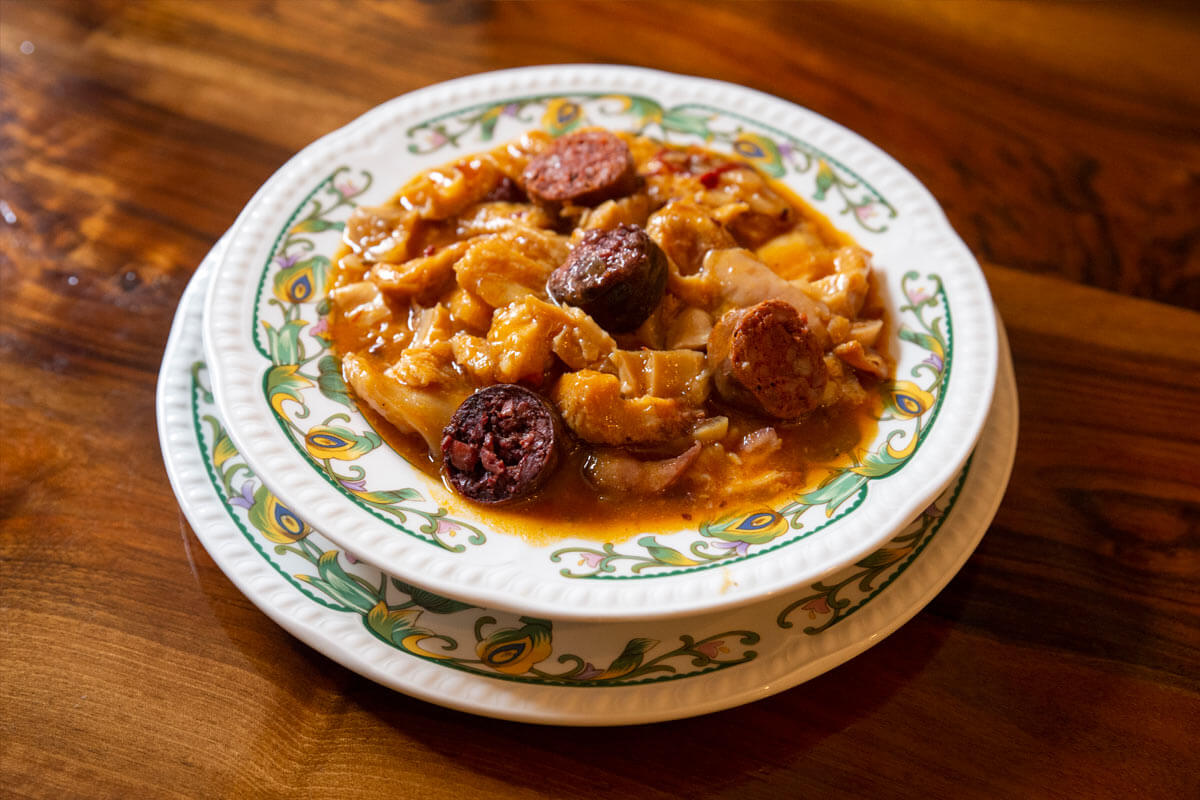
If there is one thing that truly defines our country’s gastronomy, it is traditional Spanish cuisine ingredients. Even before technique, presentation, or trends, there is the ingredient itself. Great produce shapes flavour, texture, the identity of the dish, and ultimately the guest’s experience. At Tasca La Farmacia, this idea is part of the way we understand cooking: respect the product, work with it carefully, and let it speak for itself.
Why traditional Spanish cuisine ingredients still matter today
Talking about traditional Spanish cuisine ingredients is not an empty phrase. It is, in reality, the foundation of a culinary tradition built over generations around specific ingredients, clear seasonal rhythms, and recipes that do not need to hide behind unnecessary complexity.
Traditional Spanish cooking does not come from excess, but from balance: a good legume, a vegetable at its best, a well-made stock, excellent olive oil, or properly handled fish can do far more than an overloaded recipe.
If you would like some general context about Spanish gastronomy, here is a useful reference: Wikipedia.org: Spanish cuisine
When the raw ingredient is good, cooking becomes more honest. And when the product falls short, no technique can fully save it.
What we mean by “product” in Spanish cuisine
When we talk about product, we are not simply referring to “ingredients”. We are really talking about a combination of factors:
- Quality at source
- Seasonality
- Freshness
- Proper handling
- Respect for natural flavour
That is why traditional Spanish cuisine ingredients go far beyond buying well. They also mean knowing when to wait for the right season, avoiding unnecessary elaboration, and choosing recipes that support the ingredient rather than disguise it.
7 reasons why traditional Spanish cuisine ingredients are the foundation of Spanish cooking
1) Because real flavour begins with the ingredient
The first major reason why traditional Spanish cuisine ingredients matter so much is very simple: flavour cannot be improvised. A memorable dish usually starts with an excellent base ingredient.
A quality legume, a good stock, a flavourful vegetable, or carefully chosen olive oil can elevate any recipe without the need for tricks.
As a reference for one of the pillars of Spanish cooking, here is more on olive oil: Wikipedia.org: Olive oil
2) Because traditional cooking relies on clear, honest recipes
In traditional cooking, many recipes look simple. And that is exactly why the ingredient matters even more. If a dish has only a few elements, each one becomes essential.
A stew, a spoon dish, a Spanish sharing plate, or a classic main course does not rely on decoration; it relies on the depth of flavour at its core.
3) Because seasonal produce improves the result
Another major pillar of traditional Spanish cuisine ingredients is seasonality. Cooking each ingredient at the right time offers clear advantages:
- better flavour,
- better texture,
- more culinary logic,
- and a more natural connection to the time of year.
You can find a general reference here: Wikipedia.org: Seasonality
In winter, for example, we naturally crave spoon dishes, rich stocks, slow-cooked stews, and comforting preparations. That is no coincidence: seasonality also shapes appetite.
4) Because the product gives each dish its identity
Traditional Spanish cuisine has enormous regional richness. Many recipes change depending on the place, the climate, or local customs, but they all share one thing: respect for the ingredient.
That means a dish does not just feed you; it also tells you where it comes from, how it has traditionally been cooked, and how it connects to its surroundings.
5) Because technique should support, not cover up
Good cooking knows when to intervene just enough. Technique matters, of course, but in traditional Spanish cuisine technique is there to serve the ingredient, not the other way around.
That is why, when you truly understand traditional Spanish cuisine ingredients, you also understand that cooking well often means not spoiling what was already good from the start.
6) Because guests notice it, even if they do not explain it
Not everyone talks about raw ingredients, seasonality, or product handling. But almost everyone can tell when a dish has been made with care and good produce.
They notice it in:
- the flavour,
- the texture,
- the balance,
- and the final feeling of having eaten well.
In other words, people can feel the quality of the product even if they do not put it into words.
7) Because it defines a meaningful way of cooking
The final reason is perhaps the most important: traditional Spanish cuisine ingredients are not only a gastronomic issue, but also a cultural one. They represent a way of cooking with respect, logic, and identity.
It is a way of understanding food from the ground up, without excess, and with the focus on what truly matters: that the dish has meaning and flavour.
Product, seasonality, and winter cooking: a natural connection
When cold weather arrives, this philosophy becomes even clearer. In winter, the ingredient sets the pace of the kitchen: legumes, broths, stews, and spoon dishes become more appealing. These are preparations that need time and that rely on ingredients with depth and character.
That is why talking about traditional Spanish cuisine ingredients also means talking about seasonal coherence. It is not only about cooking something delicious, but about cooking with logic.
How traditional Spanish cuisine ingredients influence the guest experience
Traditional Spanish cuisine ingredients have a direct impact on the guest experience. They influence the perception of quality, the flavour of the dish, the trust a kitchen inspires, and the likelihood of returning. Even when guests do not explain it in technical terms, they usually notice when a dish has been made with carefully chosen ingredients.
When a kitchen works with strong raw ingredients, the result is usually more consistent and more memorable.
Quick guide: what a good product brings to a traditional dish
| Element | What the product brings | Result on the plate |
|---|---|---|
| Legumes | Flavour, texture, depth | Richer, rounder spoon dishes |
| Seasonal vegetables | Freshness and balance | More natural dishes |
| Good olive oil | Aroma and depth | Better finish and stronger identity |
| Stocks and broths | Intensity and structure | Cooking with more truth |
| Properly handled produce | Respect for the ingredient | Greater authenticity |
Traditional Spanish cuisine ingredients at Tasca La Farmacia
At Tasca La Farmacia, we understand traditional Spanish cuisine ingredients as a way of doing things properly. It is not just about cooking recognisable recipes, but about building them from the right foundation: choosing the ingredient carefully, respecting flavour, and creating dishes with meaning.
That approach works just as well for a relaxed meal in Salamanca district as it does for a more dynamic plan near the Bernabéu.
- Salamanca district: https://tascalafarmacia.com/restaurante-en-el-barrio-de-salamanca-madrid/
- Bernabéu: https://tascalafarmacia.com/restaurante-en-la-zona-del-bernabeu/
And if the plan is a celebration or a shared meal, you can see group and event options here: https://tascalafarmacia.com/menus-grupos-eventos/
Traditional Spanish cuisine: less artifice, more truth
At a time when gastronomy can sometimes seem obsessed with surprise, returning to the ingredient is almost a statement of intent. Traditional Spanish cuisine does not need too many embellishments when the foundation is right.
And that is exactly the key point: traditional Spanish cuisine ingredients remain essential because they connect the dish to its origin, to the season, and to a more sincere way of cooking.
Frequently Asked Questions (FAQ)
Why are traditional Spanish cuisine ingredients so important?
Traditional Spanish cuisine ingredients are essential because they define the flavour, texture, and authenticity of each dish. In recipes built on simple preparations and only a few elements, the quality of the ingredient makes a decisive difference to the final result.
What does cooking with seasonal produce mean?
Cooking with seasonal produce means working with ingredients at their best natural moment. This usually results in better flavour, better texture, a cuisine that is more in tune with the time of year, and greater respect for the natural rhythm of each ingredient.
Is technique less important than product in Spanish cooking?
No. Technique is essential, but in traditional Spanish cuisine it should support the ingredient rather than hide it. Ideally, technique enhances the product, respects its flavour, and helps create balanced, meaningful dishes.
How does good product influence the guest experience?
Good product directly influences the perception of quality, the flavour of the dish, the trust a kitchen inspires, and the likelihood of returning. Even when guests do not express it in technical terms, they usually notice when a dish has been made with carefully chosen ingredients.
How does Tasca La Farmacia apply this product-focused philosophy?
Tasca La Farmacia applies this philosophy by focusing on traditional Spanish cuisine built around respect for the ingredient, flavour, and seasonality. The idea is to work with carefully selected produce and create recognisable, honest dishes with identity.
Book and discover our cooking
If you value traditional Spanish cuisine ingredients, at Tasca La Farmacia you will find an approach where ingredients and cooking with identity go hand in hand.